SPRINT: a landmark study in the treatment of NF1 PN1,2
SPRINT Phase 2 Stratum 1 was an open-label, multicenter, single-arm study coordinated with the NCI. This study of 50 pediatric patients with NF1-related inoperable plexiform neurofibromas (PN) that caused significant morbidity was designed to assess the efficacy and safety of Koselugo in reducing the volume of NF1 PN.1,2

AGE ELIGIBILITY RANGE1,2: 2 to 18 years (N=50)
Median age: 10.2 years (range: 3.5 to 17.4 years)

DOSING Koselugo (capsules)1,2
25 mg/m2 (BSA) twice daily, approximately 12 hours apart
PRIMARY ENDPOINT: Overall Response Rate (ORR) per REiNS criteria2
ORR was defined as the percentage of patients with complete response (defined as disappearance of the HCP-identified target PN) or confirmed partial response (defined as ≥20% reduction of the HCP-identified target PN).*
KEY SECONDARY ENDPOINTS3
- Duration of response
- Safety
-
PN-related pain intensity improvement using the
NRS-11†
Key inclusion criteria in SPRINT1,2
NF1 with symptomatic, inoperable PN (defined as PN that could not be completely surgically removed without risk for substantial morbidity due to PN location, invasiveness, or high vascularity)
All patients (N=50) had at least 1 clinically significant PN-related morbidity (median number of 3 [range: 1 to 5]) at baseline
Key exclusion criteria in SPRINT3
Evidence of MPNST, an optic glioma, malignant glioma, or other cancer requiring treatment with chemotherapy or radiation therapy
*The target PN was defined as the PN that caused relevant clinical symptoms or complications (PN-related morbidities). Response was confirmed by 3D MRI volumetric analysis at a subsequent assessment within 3 to 6 months.2
†Pain intensity of the target PN was self-reported by patients ≥8 years of age using the NRS-11.1
BSA=body surface area; HCP=healthcare provider; MPNST=malignant peripheral nerve sheath tumor; MRI=magnetic resonance imaging; NCI=National Cancer Institute; NF1=neurofibromatosis type 1; NRS-11=Numeric Rating Scale-11; REiNS=Response Evaluation in Neurofibromatosis and Schwannomatosis; 3D=three dimensional.
SPRINT: changing the treatment paradigm
The baseline characteristics of patients in SPRINT reflect the variability of NF1 PN

Progressive and nonprogressive PN1,4
- 42% (21/50) of patients had a progressive PN (growth ≥20% within 15 months prior to enrollment)
- 30% (15/50) of patients had a nonprogressive PN‡

Patients with and without past surgeries5
56% of patients had undergone at least 1 prior PN-related or NF1-related surgical procedure
A range of PN volumes4
Median target PN volume was 487 mL (range: 5 mL to 3820 mL)
Morbidities that were present in ≥20% (N=50) of patients included2,5:

Disfigurement
(88%)

Pain
(52%)

Visual impairment
(20%)

Motor dysfunction
(66%)
Airway dysfunction
(32%)

Bladder/bowel
dysfunction
(20%)
†Thirty-six patients had evaluable prestudy volumetric MRI data. 28% (14/50) of patients had insufficient PN progression status at baseline.4,5
Koselugo brings targeted MEK inhibition to NF1 PN treatment
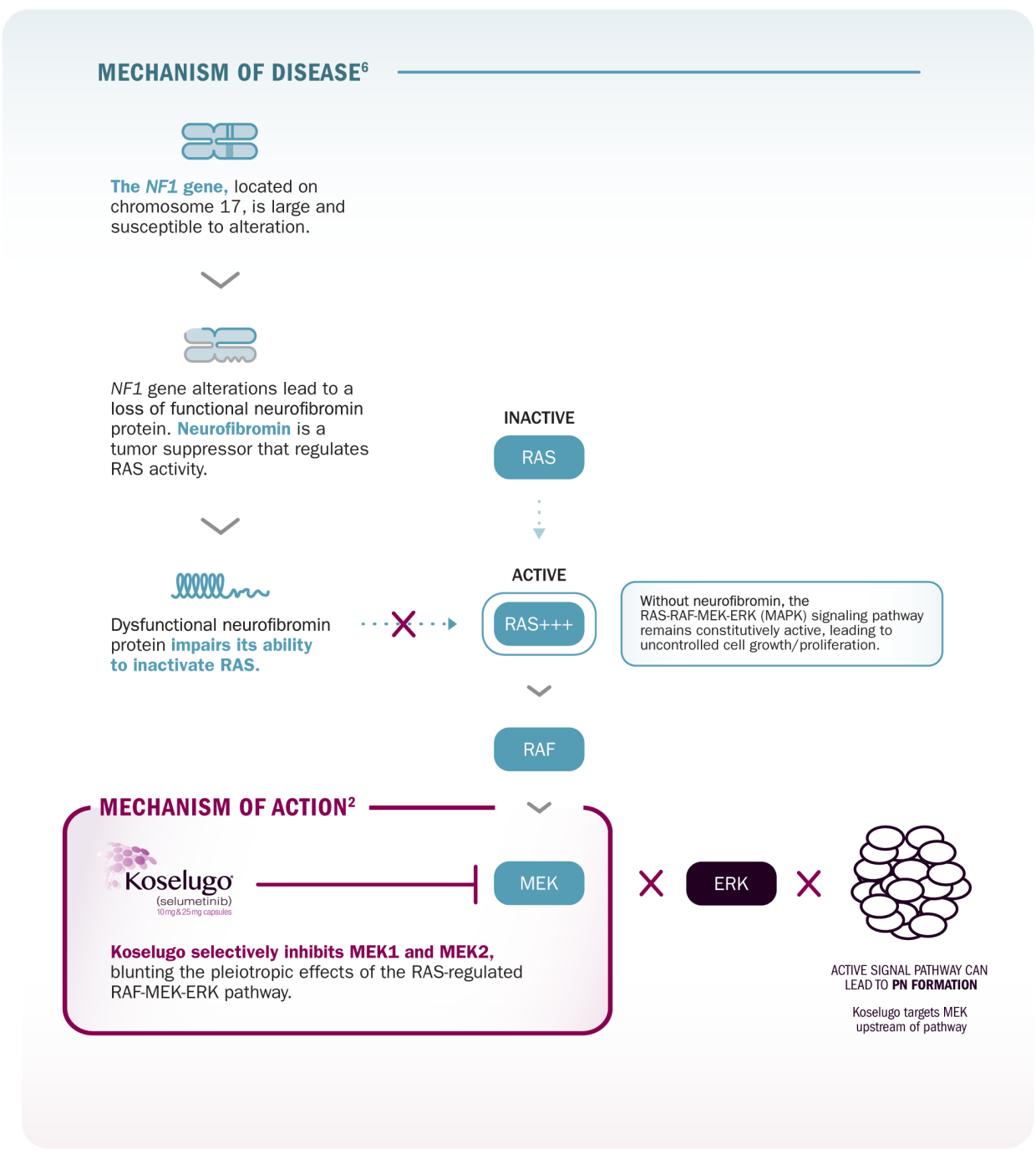
ERK=extracellular signal-regulated kinase; MAPK=mitogen-activated protein kinase; MEK=mitogen-activated protein kinase kinase; NF1=neurofibromatosis type 1; PN=plexiform neurofibromas; RAF=rapidly accelerated fibrosarcoma; RAS=rat sarcoma viral oncogene homolog.