
NF1 PN: prevalent, progressive, and debilitating1-3
PN are a common manifestation of NF1 that occur early, may progress over time, and are potentially debilitating1-3
Up to
50%
of all patients with
NF1 have PN2,3*
Results from the NCI NF1 Natural History study showed over 5.6 years4†:

82% of patients with NF1 PN had tumor progression ≥20%

The median growth rate was 16% per year (-3% to 136%)

In general, PN grew continuously
*Using whole-body MRI.3
†The NF1 Natural History study began in 2008 and is an ongoing study. Ninety-two patients with NF1-related PN between the ages of 3 and 18 years who had at least 2 volumetric scans were included in the analysis above as the age- and period-matched external control for the SPRINT study.5
MOA=mechanism of action; MRI=magnetic resonance imaging; NCI=National Cancer Institute; NF1=neurofibromatosis type 1; PN=plexiform neurofibromas.
NF1 PN: a growing concern
In patients with NF1 PN, PN volume growth rates can exceed weight or height growth rates6-8‡
In the NCI NF1 Natural History study, PN typically continued to grow.5§
Percentage change in target PN volume, Natural History study5
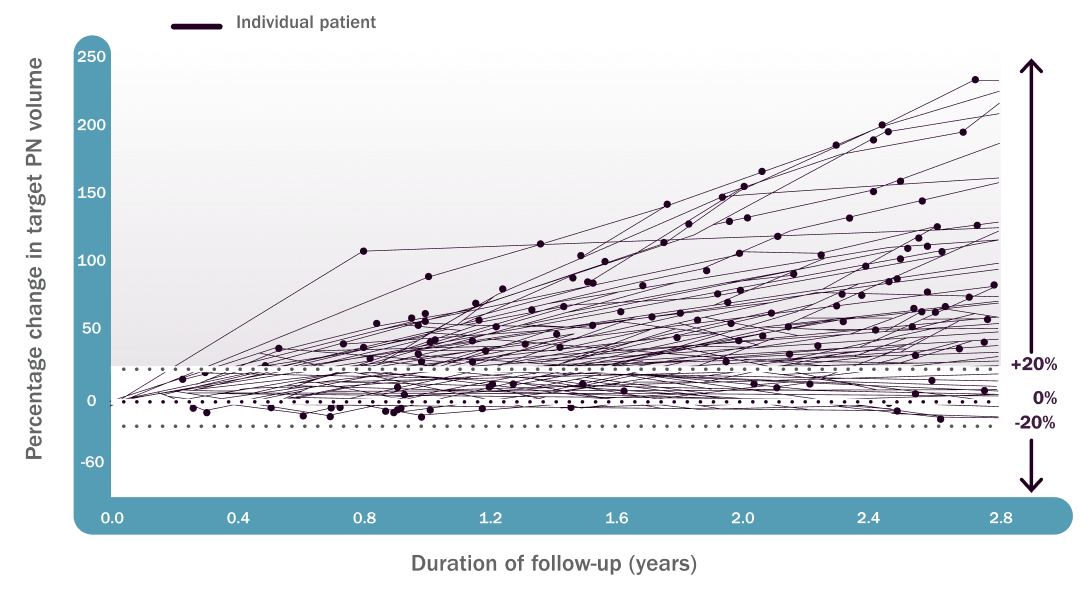
‡Based on 2 longitudinal studies, including 49 patients with 61 tumors and 70 patients with 80 tumors.6,7
§The NCI NF1 Natural History study began in 2008 and is an ongoing study. 92 patients with NF1-related PN between the ages of 3 and 18 years who had at least 2 volumetric scans were included in the analysis above as the age- and period-matched external control for the SPRINT study.5
PN typically grow fastest in the first 10 years of life.2 Early action is crucial.9
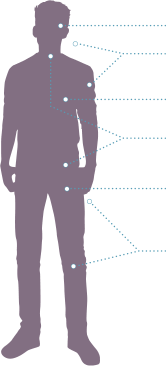
PN are a significant cause of morbidity in pediatric patients with NF11,2
Visible deformities throughout the body1
Airway compromise1,9
Motor dysfunction1,9
- Weakness
- Difficulty walking
- Numbness

Vision impairment10
PN-related pain throughout the body1
Bladder/bowel dysfunction1
PN are a significant cause of morbidity in pediatric patients with NF11,2
Vision impairment10
Visible deformities throughout the body1
Airway compromise1,4
PN-related pain throughout the body1
Bladder/bowel dysfunction1
Motor dysfunction1,4
- Weakness
- Difficulty walking
- Numbness
Some internal PN are seen only on MRI. Advanced imaging plays an
essential role in diagnosing and disease management.1,4
See advanced imaging of PN in a Koselugo patient here.
PN morbidities can worsen
over
time4:
In a retrospective study of a French cohort of pediatric patients
with NF1 PN
(N=78)11:
99% of target PN
were associated with ≥1 morbidity
89% of patients
had ≥1 target PN-related morbidity during the 24-month follow-up period
The burden of NF1 PN can go beyond physical symptoms12
Data suggest that children and teens with NF1 PN have difficulty with12:
-
Anxiety
-
Stigma
-
Depressive symptoms
-
Well-being
-
Peer relationships
-
Psychological stress
The surgical dilemma in NF1 PN
Not all PN require intervention, but when feasible, surgery is an effective means of resection and debulking NF1 PN14
Surgery can be challenging, and not all PNs may be operable or fully resectable due to1:
- Continuous growth within and throughout the nerve sheath
- Proximity to vital organs, which can occur initially or as the PN progresses
- Poorly defined margins
- Challenging locations such as the head, neck, spine, or trunk
- Hypervascularity, which can increase the risk of bleeding
PN regrowth is common after surgery
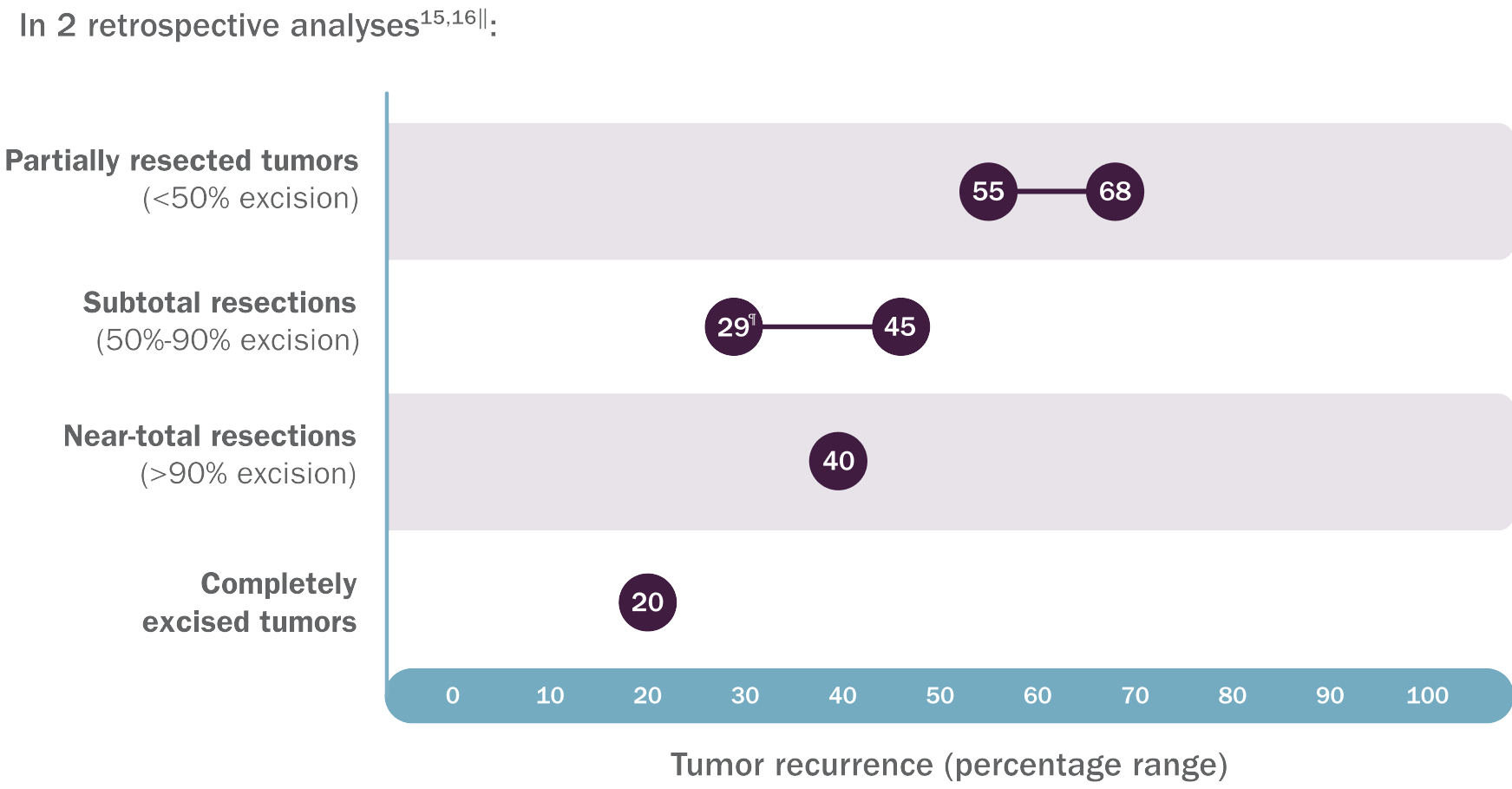
From 2 retrospective analyses
Rates of PN regrowth after surgery range from 20%-68%, depending on extent of resection.15,16‖

‖Based on a review of inpatient and outpatient records of 121 patients who had 302 procedures on 168 tumors over a 20-year period at a single large pediatric referral center and a retrospective review of 96 patients who had 186 subtotal or partial resections on 130 tumors over a 10-year follow-up period at an NF center.15,16
¶In the 2012 study by Prada CE, Rangwala FA, Martin LJ, et al, subtotal resection was defined as 50%-80% excision.15
NF=neurofibromatosis.

PN grow fastest during the first 10 years of life and typically continue to grow2,9

PN morbidities can worsen over time9

PN are highly variable and have the potential to cause life-altering clinical complications9

Not all PNs may be operable or fully resectable with surgery1
Discover Koselugo—the FIRST and ONLY FDA-approved therapy for pediatric patients with NF1 and symptomatic, inoperable PN.17,18
FDA=Food and Drug Administration.